Imagine a patient walking into your dental clinic in visible pain. They gesture to their jaw, but when your receptionist asks for their details, the patient speaks a language no one on your team understands. The frustration mounts on both sides. The patient needs urgent care, and your team wants to help, but the language barrier stands firmly in the way.
For many dental practices, this scenario is becoming increasingly common. As communities grow more diverse, clinics are seeing a rise in patients who speak little to no English. While hiring full-time translators might seem like the obvious solution, it is rarely practical or cost-effective for a typical dental practice.
So, how are modern dental clinics bridging this communication gap? Let us explore the practical approaches practices are using to serve non-English-speaking patients effectively, ensuring everyone receives the care they need without compromising the clinic's operational efficiency.
The True Cost of Language Barriers in Dental Care
Language barriers in a dental setting go beyond mere inconvenience. They can directly impact patient outcomes, clinic efficiency, and overall profitability. When a patient cannot clearly communicate their symptoms or understand their treatment plan, several issues arise:
- Increased Appointment Times: Consultations take significantly longer when staff and patients struggle to understand each other, leading to scheduling delays and frustrated patients in the waiting room.
- Higher Risk of Misunderstanding: Dental procedures often involve complex instructions for pre- and post-operative care. Misunderstandings can lead to complications or poor recovery.
- Lower Case Acceptance Rates: If a patient does not fully grasp the necessity of a procedure or the details of the cost, they are far less likely to proceed with the treatment. As we explored in our analysis of why patients leave your dental clinic confused about their treatment plan, clear communication is essential for case acceptance.
- Missed Appointments: Patients who feel anxious about communication difficulties are more likely to cancel or simply not show up.
The financial impact is substantial. A clinic that struggles to accommodate multilingual patients is essentially turning away a growing segment of the local community.
Traditional Workarounds and Their Limitations
Historically, clinics have relied on a few common workarounds to handle language barriers, but each comes with significant drawbacks.
Relying on Bilingual Staff
Many clinics lean heavily on staff members who happen to speak a second language. While helpful, this approach is inconsistent. If the bilingual staff member is on leave, busy with another patient, or does not speak the specific language required, the clinic is back to square one. Furthermore, relying on clinical staff for translation duties pulls them away from their primary responsibilities.
Using Family Members as Interpreters
Patients often bring family members, sometimes even children, to translate. While this provides immediate relief, it is fraught with risks. Family members may lack the medical vocabulary needed to accurately translate complex dental terms. They might also filter information, either to protect the patient from bad news or due to their own misunderstandings. This compromises the accuracy of the medical history and informed consent process.
Professional Telephone Interpreting Services
Some clinics use professional telephone interpreting services. While accurate, these services can be expensive, often charging by the minute. They also add a layer of awkwardness to the consultation, as the dentist must speak into a phone, wait for the translation, and then wait for the patient's response. It disrupts the natural flow of the appointment and can make the patient feel alienated.
Practical Approaches for Modern Clinics
Recognizing the limitations of traditional methods, forward-thinking dental clinics are adopting more practical, scalable solutions to manage multilingual patient interactions.
1. Standardized Multilingual Intake Forms
One of the most effective first steps is translating standard intake forms, medical history questionnaires, and consent documents into the most common languages spoken in your community.
By allowing patients to provide their medical history and personal details in their native language before they even sit in the chair, clinics can significantly reduce the time spent trying to gather this information verbally. This ensures accuracy and allows the dentist to review the information beforehand.
| Document Type | Benefit of Translation |
|---|---|
| Medical History Forms | Ensures accurate disclosure of allergies and medications. |
| Consent Forms | Protects the clinic legally and ensures the patient understands the procedure. |
| Post-Op Instructions | Reduces the risk of complications and emergency calls. |
| Financial Agreements | Clarifies costs and payment expectations, improving collection rates. |
2. Visual Aids and Demonstration Models
Dentistry is inherently visual. When words fail, visual aids can bridge the gap. Clinics are increasingly using 3D models, intraoral cameras, and educational videos to explain procedures.
Showing a patient a visual representation of a cavity or demonstrating how a crown will be placed is often more effective than trying to explain it, regardless of the language spoken. This approach not only helps multilingual patients but improves comprehension for all patients.
3. Leveraging Technology for Real-Time Translation
The most significant shift in how clinics handle language barriers is the adoption of technology. While consumer-grade translation apps like Google Translate can be helpful for basic interactions at the front desk, they often struggle with medical terminology and lack the privacy safeguards required in a healthcare setting.
Instead, clinics are turning to specialized communication tools designed for professional environments. These tools can facilitate smoother interactions without the need for a human translator present.
For instance, some clinics use tablet-based systems that offer real-time, medically accurate translation for common dental scenarios. This allows the dentist to maintain eye contact with the patient while the device handles the translation, creating a more personal and reassuring experience.
The Role of AI in Patient Communication
Artificial Intelligence is rapidly transforming how businesses handle customer interactions, and dental clinics are no exception. AI-powered solutions are proving particularly valuable in managing the initial point of contact: the phone call.
When a non-English-speaking patient calls to book an appointment or ask a question, the front desk often struggles to assist them. This can lead to frustration and lost business. As highlighted in our guide on how dentists can stop missing appointment calls, every missed or mishandled call is a missed opportunity.
AI voice agents are emerging as a powerful solution to this problem. These systems can be programmed to recognize and respond in multiple languages, ensuring that every caller receives immediate, accurate assistance in their preferred language.
How AI Voice Agents Support Multilingual Clinics
An AI voice agent can handle a variety of tasks that typically overwhelm a busy front desk, especially when language barriers are involved:
- Multilingual Appointment Scheduling: The AI can converse with the patient in their native language, check availability, and book the appointment directly into the clinic's calendar.
- Answering FAQs: Routine questions about location, hours, or accepted insurance can be answered instantly, regardless of the language spoken.
- Triage and Routing: The AI can determine the nature of the call (e.g., a routine check-up vs. a dental emergency) and route it appropriately, ensuring urgent cases are prioritized.
By handling these initial interactions, AI voice agents free up the front desk staff to focus on the patients physically present in the clinic, improving the overall patient experience. This is a crucial step in modernizing clinic operations, similar to the strategies discussed in our broader look at how AI voice agents are changing customer service for small businesses.
Creating a Welcoming Environment
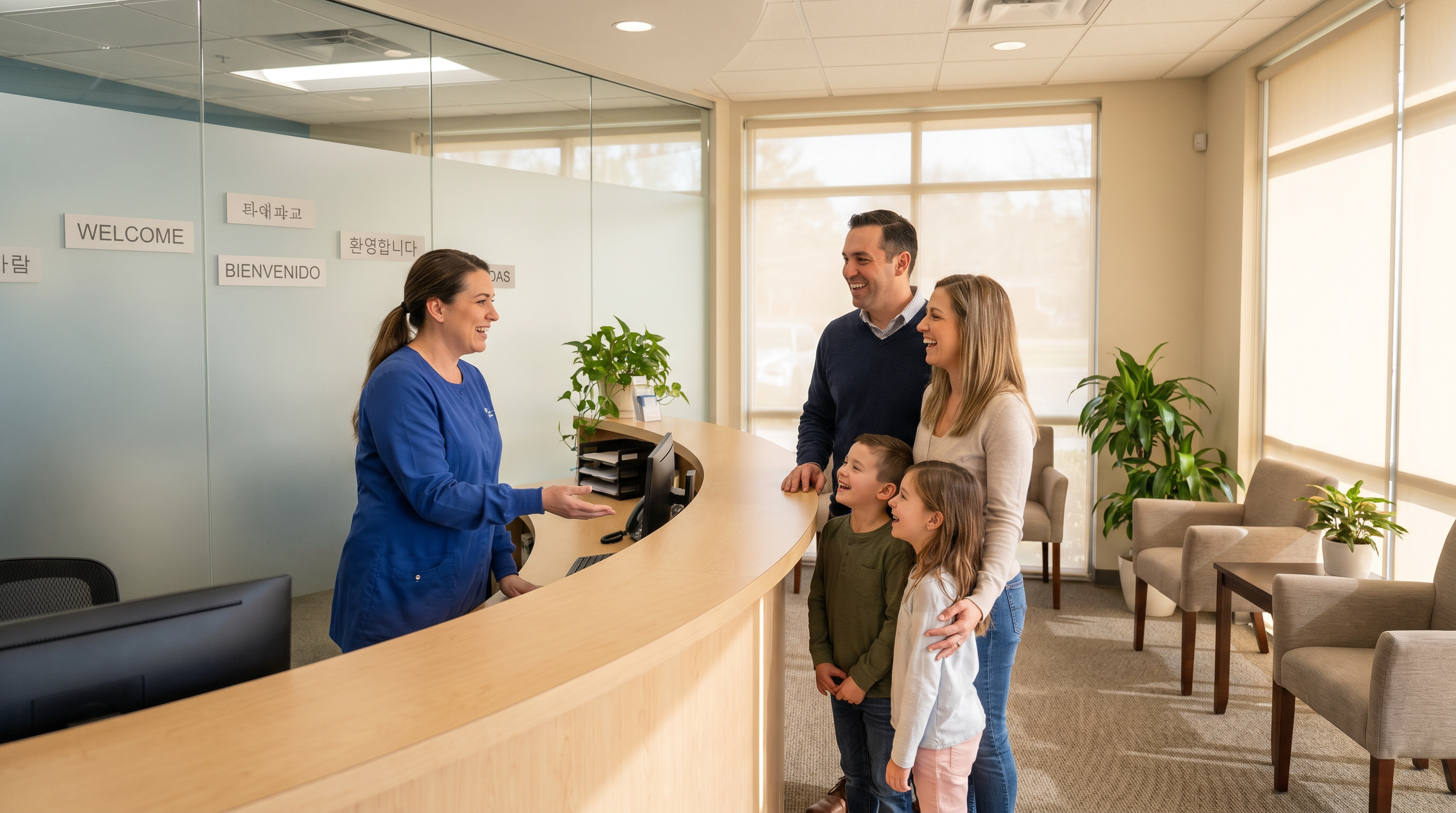
Beyond forms and technology, creating a welcoming environment for multilingual patients involves cultural sensitivity and a willingness to adapt.
Simple gestures, such as learning a few basic greetings in the languages commonly spoken in your community, can go a long way in making patients feel comfortable. Ensuring that signage within the clinic is clear and uses universally understood symbols can also help patients navigate the space more easily.
Ultimately, the goal is to ensure that every patient, regardless of the language they speak, feels respected, understood, and confident in the care they are receiving.
Streamlining Communication with Speako
Handling multilingual patients doesn't have to mean hiring a team of translators or relying on ad-hoc solutions. By implementing standardized translated materials, utilizing visual aids, and leveraging modern technology, dental clinics can provide excellent care to a diverse patient base.
If your clinic is struggling to manage patient calls, especially those in different languages, it might be time to explore how AI can help. Speako offers intelligent voice AI solutions designed to handle customer inquiries, book appointments, and ensure no call goes unanswered. Discover how our technology can support your practice across various industries and help you provide a seamless experience for every patient.

Head of Customer Success at Speako AI. Former restaurant operations manager with 8 years in hospitality before moving into tech.