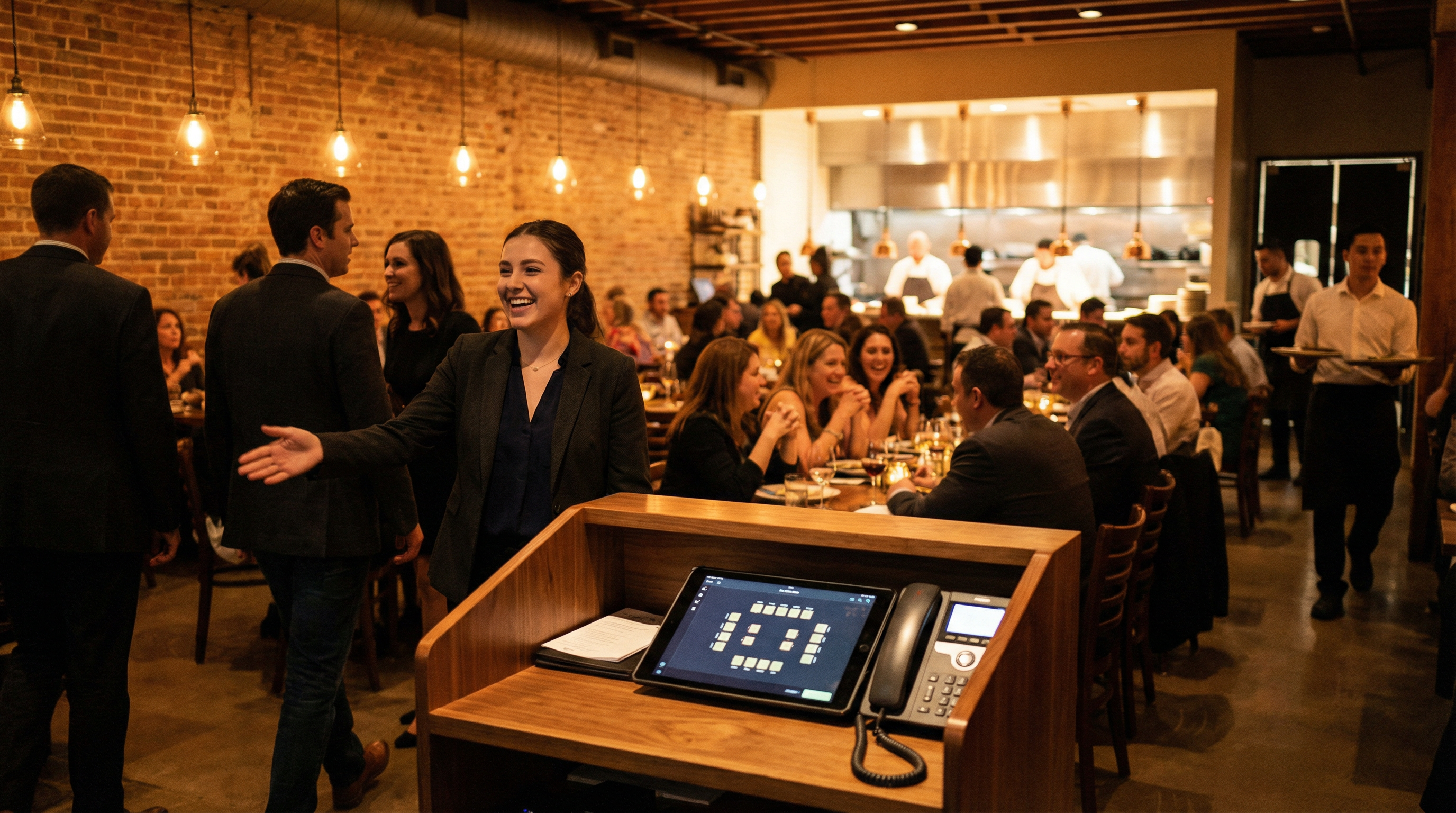
It’s 7:30 PM on a Friday. The dining room is packed, the kitchen is in the weeds, and the phone at the host stand won’t stop ringing. Your host is caught between seating a party of six, managing a frustrated delivery driver, and answering a call from someone asking if you have gluten-free options. In the chaos, three other calls go to voicemail.
For most restaurant owners and managers, this scenario is painfully familiar. The telephone remains a critical lifeline for revenue—driving reservations, takeout orders, and private event inquiries—yet it is often the most neglected channel during peak hours. As staffing challenges persist and customer expectations for immediate responses grow, a new solution has emerged: the AI receptionist.
This complete guide explores how AI receptionists are transforming restaurant operations, the real costs of missed calls, and what you need to know before implementing voice AI in your establishment.
The Hidden Cost of the Unanswered Phone
Before evaluating the solution, it is essential to understand the scale of the problem. Many operators underestimate how much revenue is lost to the dial tone.
According to industry data, restaurants miss a significant portion of their inbound calls during peak service times. As we explored in our analysis of how many calls restaurants miss during peak hours, the numbers are staggering. A missed call isn't just a minor inconvenience; it often represents a lost reservation or a forfeited takeout order.
Consider the math for a typical mid-sized restaurant:
| Metric | Average Value |
|---|---|
| Missed calls per week | 45 |
| Percentage of calls with high intent (booking/ordering) | 40% |
| Average party size / order value | 3 people / $85 |
| Potential lost revenue per week | $1,530 |
| Potential lost revenue per year | $79,560 |
When a customer calls and gets no answer, they rarely call back. Instead, they call the next restaurant on their Google Maps search. The hidden cost extends beyond immediate revenue to long-term customer lifetime value and online reputation.
What Exactly is an AI Receptionist for Restaurants?
An AI receptionist is not a traditional interactive voice response (IVR) system—the frustrating "press 1 for hours, press 2 for reservations" menus of the past. Modern AI voice agents use natural language processing to hold dynamic, human-like conversations with callers.
These systems can understand context, handle interruptions, and respond intelligently based on your restaurant's specific knowledge base. When a customer asks, "Do you have any tables for four around 8 PM tonight, and is your patio dog-friendly?", the AI can process both questions simultaneously, check availability, and provide a comprehensive answer.
Core Capabilities
A robust AI receptionist handles several critical functions:
- Reservation Management: Integrating with your booking system to check availability, book tables, and manage cancellations.
- FAQ Answering: Handling routine questions about hours, location, parking, dietary restrictions, and dress codes.
- Order Taking: Processing takeout and delivery orders, including complex modifications and upselling.
- Call Routing: Intelligently transferring calls to human staff only when necessary (e.g., a catering inquiry or a manager request).
The Operational Impact on Your Team
Implementing an AI receptionist fundamentally changes the dynamic at the front door. The primary benefit is not replacing staff, but rather augmenting their capabilities and reducing burnout.
Eliminating the "Host Stand Bottleneck"
During a Friday night rush, a host's primary responsibility should be hospitality—greeting guests, managing the floor plan, and ensuring a smooth flow of service. When they are constantly interrupted by the phone, the in-person guest experience suffers.
By offloading routine calls to an AI, your front-of-house team can focus entirely on the guests standing in front of them. This shift reduces stress, decreases wait times at the door, and elevates the overall level of service.
24/7 Availability
Customers don't only call during operating hours. Many attempt to make reservations or ask questions early in the morning or late at night. An AI receptionist ensures that every call is answered promptly, regardless of the time, capturing revenue that would otherwise be lost to voicemail.
Evaluating AI Voice Agents: What to Look For
Not all AI voice solutions are created equal. When evaluating options for your restaurant, consider the following critical factors:
1. Natural Conversational Flow
The system must sound natural and handle the unpredictable nature of human speech. It needs to understand accents, background noise, and colloquialisms. If the AI sounds robotic or forces callers into rigid conversational paths, it will frustrate your customers.
2. Deep Integration Capabilities
An AI receptionist is only as good as the data it can access. It must integrate seamlessly with your existing tech stack, particularly your reservation platform (like Resy or OpenTable) and your Point of Sale (POS) system. Without these integrations, the AI cannot perform high-value tasks like booking tables or processing orders.
3. Customization and Brand Voice
Your restaurant has a unique personality, and your AI should reflect that. Whether you run a high-end steakhouse or a casual neighborhood pizzeria, the AI's tone, vocabulary, and greeting should align with your brand identity.
4. Reliability and Fallback Mechanisms
Technology is not infallible. The system must have intelligent fallback mechanisms. If the AI encounters a situation it cannot handle, it should gracefully transfer the call to a human staff member or take a detailed message, ensuring the customer is never left at a dead end.
The Financial Equation: ROI of AI Receptionists
When considering the investment in an AI receptionist, it is helpful to compare it to the cost of human labor. Hiring a dedicated reservationist or additional host to manage the phones during peak hours can cost thousands of dollars per month, factoring in wages, training, and turnover.
In contrast, AI solutions typically operate on a predictable monthly subscription model. When you factor in the recovered revenue from previously missed calls and the operational efficiencies gained, the return on investment is often realized within the first few weeks of deployment.
As detailed in our broader look at how AI voice agents are changing customer service, the economic advantage is clear for businesses with high call volumes and staffing constraints.
Getting Started with Voice AI
Transitioning to an AI receptionist requires thoughtful planning. Start by analyzing your call logs to understand your peak call times and the most common inquiries. Build a comprehensive knowledge base that covers everything a customer might ask.
Most importantly, communicate the change to your staff. Emphasize that the AI is a tool designed to make their jobs easier, not a replacement for their hospitality skills.
The restaurant industry is built on human connection, and technology should serve to enhance that connection, not replace it. By handling the repetitive, high-volume tasks, an AI receptionist allows your team to do what they do best: provide exceptional hospitality to the guests in your dining room.
If you're ready to stop missing calls and start capturing more revenue, explore how Speako's AI receptionists for restaurants can transform your front-of-house operations. With seamless integrations and natural conversational abilities, you can ensure every customer gets the attention they deserve, even during your busiest shifts. Discover our advanced tools to see how we can customize a solution for your specific needs, or explore how we support other industries like property management and home services.

Chief Product Specialist at Speako AI.