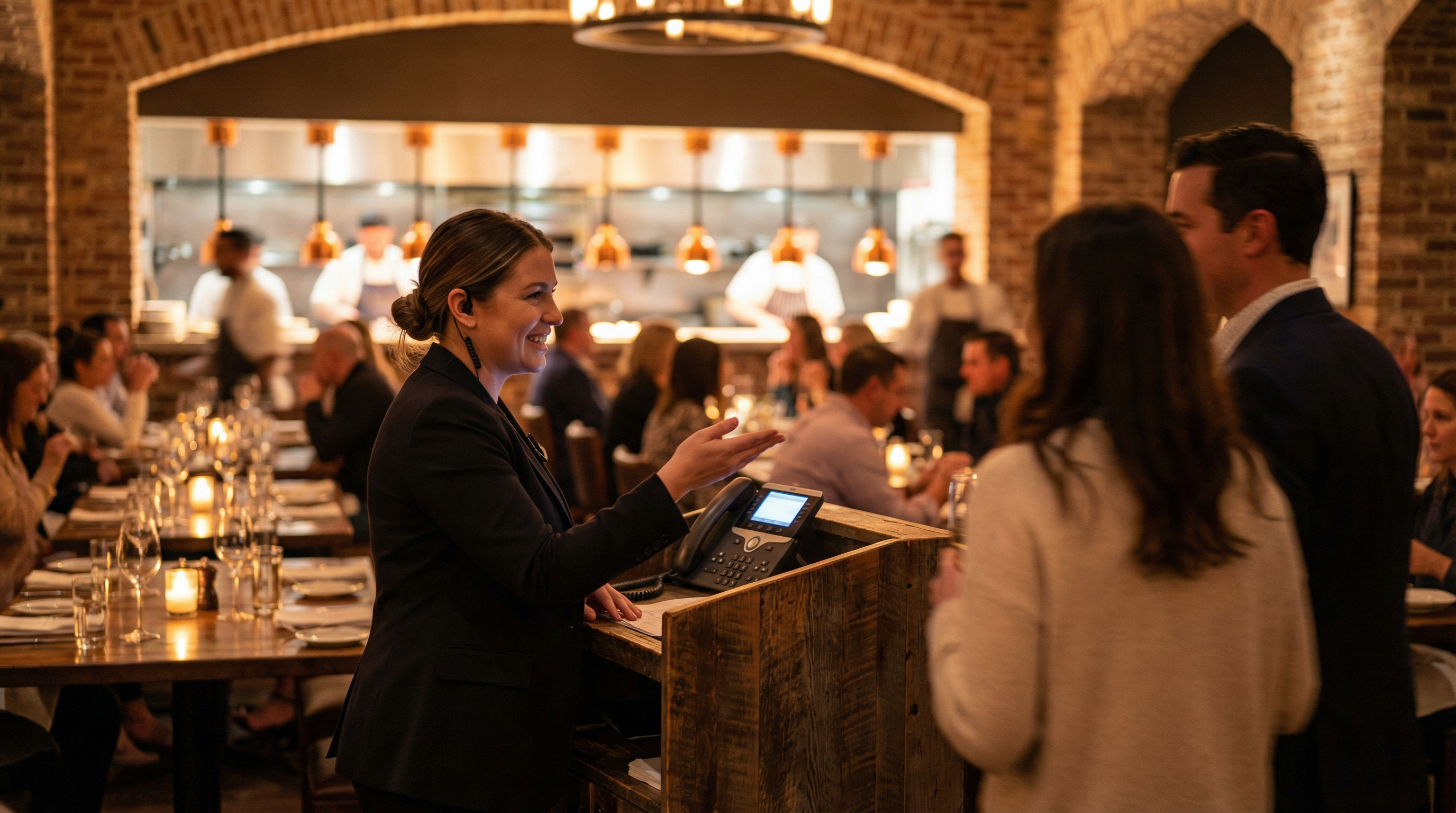
It’s 7:30 PM on a Friday. The dining room is packed, tickets are printing non-stop, and the phone starts ringing. It rings three times, four times, five times. Your host is busy seating a party of six, and your bartender is shaking three cocktails at once. The caller hangs up. That was a reservation for four, or maybe a $150 takeout order. Gone.
For years, the solution to this problem was either hiring more staff or accepting that missed calls are just the cost of doing business. But recently, a new option has emerged: AI receptionists.
The promise is alluring—a virtual assistant that never sleeps, never gets overwhelmed, and handles every call instantly. But do AI receptionists for restaurants actually work in the real world, or are they just another tech gimmick that frustrates customers?
Let’s take an honest look at what AI phone answering can and cannot do for your restaurant.
The Real Cost of Missed Calls
Before evaluating the solution, we need to understand the problem. Many restaurant owners underestimate how much revenue slips through the cracks when the phone goes unanswered.
Consider a typical mid-sized restaurant. If you miss just five calls a day during peak hours, and we assume a conservative estimate that two of those were potential reservations or takeout orders worth $50 each, that’s $100 a day in lost revenue. Over a month, that’s $3,000. Over a year, it’s $36,000.
As we explored in our analysis of how many calls restaurants miss during peak hours, the volume of missed opportunities is often staggering. Customers today have little patience; if you don't answer, they will simply call the next restaurant on their list.
What AI Receptionists Do Well
When implemented correctly, AI receptionists excel at handling the repetitive, high-volume inquiries that take up the majority of your staff's time on the phone.
1. Answering Basic Questions
"What are your hours today?" "Do you have parking?" "Are you open on Thanksgiving?"
These questions make up a significant portion of restaurant call volume. An AI receptionist can answer these instantly and accurately, freeing up your host to focus on the guests standing right in front of them.
2. Handling Peak Volume
Unlike a human host who can only handle one call at a time, an AI system can handle dozens of simultaneous calls. When the Friday night rush hits, every caller gets an immediate response instead of a busy signal or endless ringing.
3. After-Hours Support
When the restaurant is closed, the AI is still working. It can capture reservations or answer questions from customers planning their visit for the next day. This is a massive upgrade from a generic voicemail greeting, providing a better experience for after-hours call handling.
Where AI Receptionists Fall Short
Despite the impressive technology, AI receptionists are not a magic bullet. There are specific scenarios where human intervention is still necessary.
1. Complex Catering Inquiries
If a customer is calling to plan a 50-person corporate event with specific dietary restrictions and a custom menu, an AI is not the right tool for the job. These high-value, complex interactions require the nuance and negotiation skills of a human manager.
2. Handling Complaints
When a customer calls because their takeout order was missing an item, they are already frustrated. Talking to a machine, no matter how polite, can escalate that frustration. In these situations, empathy and immediate problem-solving from a human staff member are crucial.
3. The "Vibe" Check
Some callers want to know if the restaurant is "too loud for a first date" or if the patio is "too chilly tonight." These subjective questions are difficult for an AI to answer authentically.
The Hybrid Approach: The Best of Both Worlds
The most successful restaurants aren't replacing their staff with AI; they are using AI to support their staff.
A hybrid approach involves setting up the AI receptionist to handle the first line of defense. It answers every call immediately, handles the basic questions, and routes the complex inquiries to the appropriate human staff member.
| Scenario | Handled By | Outcome |
|---|---|---|
| "What time do you close?" | AI Receptionist | Instant answer, staff uninterrupted |
| "I need to book a table for 2." | AI Receptionist | Reservation booked via integration |
| "My delivery is late." | Human Staff | AI routes call to manager for resolution |
| "Can you host a wedding rehearsal?" | Human Staff | AI takes details and routes to events coordinator |
This setup ensures that no call is missed, basic questions are answered instantly, and your staff only spends time on the phone when their human touch is actually needed.
The Verdict: Do They Work?
Yes, AI receptionists for restaurants absolutely work—provided you have the right expectations. They are not a replacement for human hospitality, but they are an incredibly effective tool for managing call volume, capturing lost revenue, and improving the customer experience.
If your staff is constantly overwhelmed by the phone ringing during service, or if you suspect you are losing business to missed calls, it is a technology worth exploring.
If you're looking for a solution designed specifically for the hospitality industry, Speako's AI voice agents for restaurants can handle your peak hour overflow, answer common questions, and ensure you never miss another booking. You can also explore our advanced tools to see how it integrates with your existing operations.

Chief Product Specialist at Speako AI.