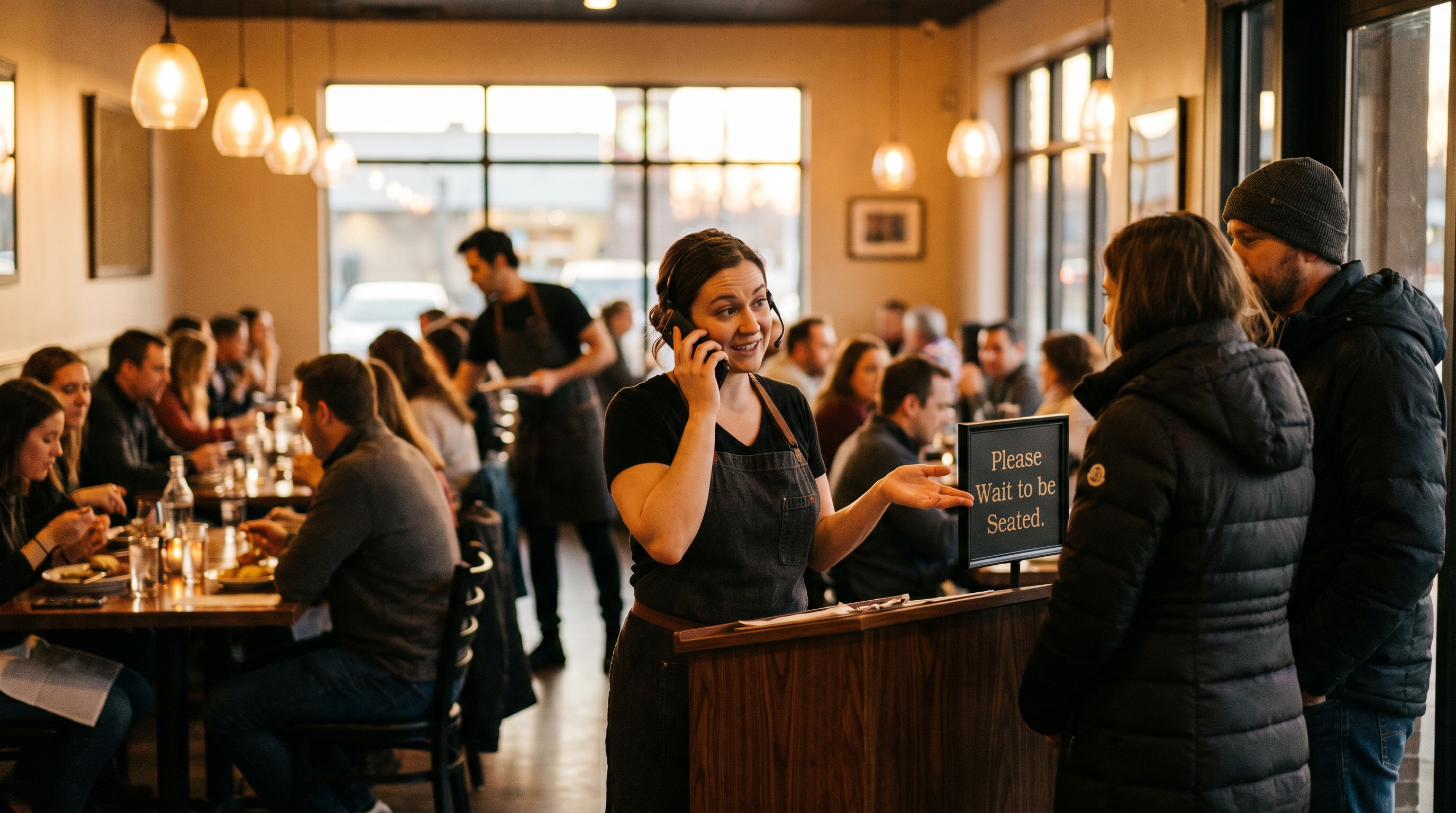
It's 7:30 PM on a Friday. The dining room is packed, the kitchen printer is firing non-stop, and the phone rings for the fifth time in two minutes. Your host, who moved to the country six months ago and is still perfecting their English, picks up. On the other end is a customer calling from a noisy car, trying to ask if your "spicy garlic prawns" can be made without garlic due to an allergy, and whether you have a table for six at 8:15 PM.
The host struggles to hear over the background noise. The customer grows frustrated repeating themselves. The result? A booking is lost, or worse, a dangerous allergy miscommunication occurs.
Language barriers and communication breakdowns in restaurants are more common than most owners admit. In an industry built on hospitality and precision, the inability to clearly understand a customer—or have them understand your staff—carries a heavy cost. It affects everything from order accuracy to online reviews, and ultimately, your bottom line.
The Real Cost of Miscommunication
When we talk about language barriers in hospitality, we often focus on the immediate awkwardness. However, the business impact runs much deeper. Miscommunication directly affects revenue and reputation in several measurable ways.
1. Order Errors and Food Waste
The most immediate consequence of a communication breakdown is a wrong order. When a customer asks for "no dairy" and the staff member hears "no berries," the kitchen prepares a dish that will inevitably be sent back.
This creates a domino effect:
- Food waste: The original dish must be thrown away.
- Lost time: The kitchen has to rush a replacement, disrupting the flow of other orders.
- Customer dissatisfaction: The customer watches their friends eat while they wait for their corrected meal.
According to industry data, the average cost of a comped or remade meal is between $15 and $30. If miscommunication leads to just three wrong orders a week, that's over $4,000 a year in direct losses—not counting the potential loss of a repeat customer.
2. The Review Penalty
Customers are remarkably unforgiving when they feel they haven't been heard. A quick glance at restaurant reviews on Google or Yelp reveals a common theme among one-star ratings: "They got my order wrong and didn't understand how to fix it," or "Trying to book a table over the phone was impossible."
Negative reviews directly impact foot traffic. When potential diners see a pattern of poor service or order mix-ups, they simply choose another venue. As we explored in our analysis of why restaurants miss customer calls, the frustration begins before the customer even walks through the door.
3. Staff Stress and Turnover
It is incredibly stressful for staff members to constantly navigate language barriers, especially during peak service times. When a host or server feels they cannot effectively communicate with customers, their confidence drops. This stress often leads to burnout and high turnover rates.
Replacing a front-of-house staff member costs time and money in recruitment and training. Creating an environment where staff feel supported in their communication is essential for retention.
Bridging the Gap: Practical Solutions
You cannot eliminate language barriers entirely, especially in diverse cities with multicultural workforces and customer bases. However, you can implement systems to minimize the friction and ensure clear communication.
Standardize Your Menu Language
One of the simplest ways to reduce confusion is to standardize how your menu items are described and ordered.
- Use clear, descriptive names: Avoid overly clever or ambiguous names for dishes.
- Implement a numbering system: If your menu features complex names or foreign words that customers struggle to pronounce, adding numbers (e.g., "I'll have the number 14") instantly removes the pronunciation barrier.
- Highlight allergens clearly: Use universal symbols for common allergens (gluten-free, dairy-free, vegetarian) so customers can point to what they need, reducing the reliance on verbal explanation.
Optimize Your Phone Systems
The phone is often the most challenging communication channel because visual cues—like pointing or facial expressions—are removed. Background noise on both ends only compounds the problem.
To handle this, many restaurants are moving away from relying solely on front-of-house staff to manage the phones during busy periods. Diverting calls to a dedicated reservationist or utilizing technology can ensure that complex inquiries are handled clearly. For more insights on managing call volume, read our guide on how to reduce missed calls in your restaurant without hiring.
Invest in Visual Training
When training staff who are not native speakers, rely heavily on visual aids rather than just verbal instructions or dense manuals.
- Photo menus: Provide staff with a reference guide that includes photos of every dish, along with key ingredients and common modifications.
- Role-playing: Practice common customer interactions, focusing on the specific phrases and questions that arise most frequently.
- Cheat sheets: Keep a small, laminated card at the host stand or POS terminal with phonetic spellings of difficult menu items or standard responses to common questions.
The Role of Technology in Clear Communication
Modern restaurant technology is increasingly designed to bridge communication gaps. Point-of-Sale (POS) systems with intuitive, image-based interfaces help staff punch in orders accurately, even if they are still learning the language.
Similarly, digital ordering platforms—whether via QR codes at the table or online for takeout—allow customers to input their exact preferences, bypassing the verbal exchange entirely. This is particularly useful for complex orders or severe allergies, where precision is non-negotiable.
However, technology should enhance hospitality, not replace it. The goal is to remove the friction of miscommunication so your staff can focus on providing a warm, welcoming experience.
Ensuring Every Customer is Heard
Clear communication is the foundation of good hospitality. When customers feel understood, they relax, enjoy their meal, and are far more likely to return. By standardizing your menu, optimizing your phone systems, and leveraging the right technology, you can turn potential communication breakdowns into seamless service.
If you're looking for ways to ensure every customer call is handled clearly and professionally, even during your busiest shifts, explore how Speako's AI voice agents for restaurants can help. Our technology is designed to understand complex accents, manage background noise, and handle bookings and inquiries flawlessly, so your staff can focus on the diners in front of them. Learn more about our features and see how we support various industries in delivering exceptional customer service.
The Hidden Impact on Customer Loyalty
Beyond the immediate frustration of a wrong order or a missed reservation, communication breakdowns have a profound impact on long-term customer loyalty. In the restaurant industry, repeat business is the lifeblood of profitability. Acquiring a new customer costs significantly more than retaining an existing one. When a customer experiences a communication failure, their likelihood of returning drops dramatically.
Consider the psychology of dining out. Customers are not just paying for food; they are paying for an experience. They want to feel taken care of, understood, and valued. When a staff member struggles to understand a request, or when a customer cannot understand the staff member's explanation of a special, that sense of being cared for is compromised. The interaction becomes transactional and stressful, rather than hospitable and relaxing.
This is particularly true for customers with specific dietary requirements or allergies. For these diners, clear communication is not just a matter of preference; it is a matter of health and safety. If they feel that their needs are not being accurately conveyed to the kitchen, they will simply choose to dine elsewhere in the future. The anxiety of a potential allergic reaction far outweighs the desire to eat at a specific restaurant.
Strategies for Empowering Your Team
Addressing communication challenges requires a proactive approach that empowers your team rather than penalizing them. It is essential to create an environment where staff feel comfortable asking for clarification and where they have the tools they need to succeed.
Foster a Culture of Patience and Support
The first step is to cultivate a culture of patience and support within your restaurant. This starts from the top down. Management must demonstrate that it is acceptable to ask a customer to repeat themselves or to seek help from a colleague if a communication barrier arises.
When staff feel that they will be reprimanded for not understanding a customer immediately, they are more likely to guess or make assumptions, which leads to errors. Encourage staff to use phrases like, "I want to make sure I get this exactly right for you, could you please repeat that?" or "Let me double-check that with the kitchen to be absolutely certain." These phrases show the customer that the staff member cares about accuracy, rather than highlighting a lack of understanding.
Implement Peer Mentorship Programs
Pairing newer staff members or those who are still developing their language skills with more experienced, fluent colleagues can be highly effective. This peer mentorship allows for real-time support and learning. The experienced staff member can step in to assist with complex interactions, while the newer staff member observes and learns the appropriate phrasing and responses.
This approach also builds team cohesion and ensures that customers receive consistent service, regardless of who is serving them. It transforms a potential point of failure into an opportunity for collaborative problem-solving.
Utilize Multilingual Resources
If your restaurant operates in a diverse community or employs staff from various linguistic backgrounds, leverage those language skills as an asset. Identify which staff members speak which languages and ensure that this information is known across the team.
When a customer struggles to communicate in English, having a staff member who can speak their native language can instantly defuse frustration and create a memorable, positive experience. This not only solves the immediate communication issue but also builds a strong connection with that customer, increasing the likelihood of repeat business.
The Financial Argument for Better Communication
Investing time and resources into improving communication within your restaurant is not just about providing better service; it is a sound financial decision. The costs associated with miscommunication—comped meals, lost reservations, negative reviews, and staff turnover—add up quickly.
Let's break down the potential financial impact:
| Cost Category | Estimated Weekly Cost | Estimated Annual Cost |
|---|---|---|
| Comped/Remade Meals (3 per week @ $20) | $60 | $3,120 |
| Lost Reservations (2 per week @ $50 profit) | $100 | $5,200 |
| Staff Turnover (1 replacement per year) | N/A | $2,500 |
| Total Estimated Cost of Miscommunication | $160 | $10,820 |
These figures are conservative estimates for a small to medium-sized restaurant. The actual costs can be significantly higher, especially when factoring in the unquantifiable impact of negative word-of-mouth and lost lifetime customer value. By implementing the strategies outlined above, you can mitigate these costs and improve your bottom line.
Conclusion: Communication as a Competitive Advantage
In a crowded and competitive restaurant landscape, exceptional service is often the key differentiator. Clear, effective communication is the bedrock of that service. By acknowledging the challenges of language barriers and proactively implementing solutions—from standardized menus and visual training to supportive team cultures and smart technology—you can transform potential points of friction into opportunities for connection.
When your staff and your customers understand each other perfectly, the focus shifts back to where it belongs: the food, the atmosphere, and the joy of dining out. This is how you build a loyal customer base and a thriving, profitable restaurant.
If you're looking for ways to ensure every customer call is handled clearly and professionally, even during your busiest shifts, explore how Speako's AI voice agents for restaurants can help. Our technology is designed to understand complex accents, manage background noise, and handle bookings and inquiries flawlessly, so your staff can focus on the diners in front of them. Learn more about our features and see how we support various industries in delivering exceptional customer service.

Chief Product Specialist at Speako AI.